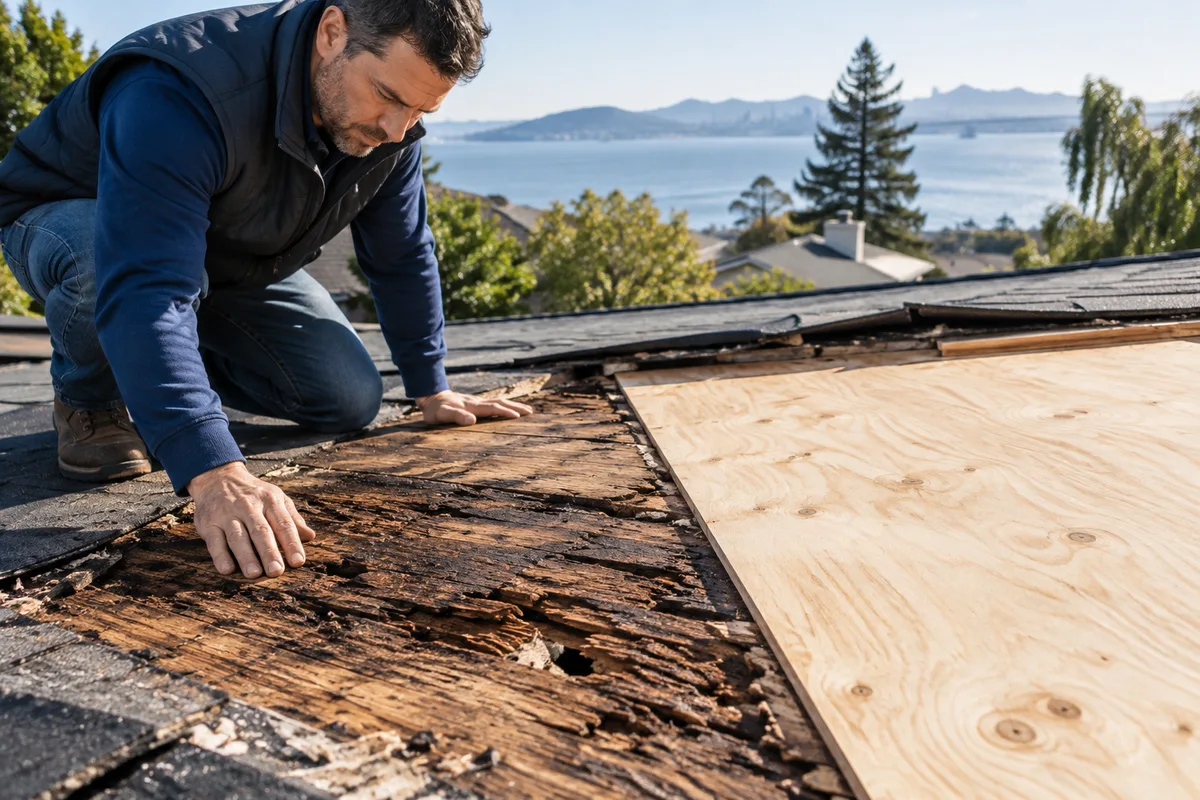
The short answer
Define the included repair allowance, evidence required for extra work, pricing basis and approval process before tear-off. Unknown condition does not have to mean uncontrolled billing.
In this guide
Read the allowance as a scope limit
Look for phrases such as damaged wood extra, incidental carpentry excluded or decking allowance. Ask what each phrase covers and whether it refers to sheets, area, linear components or another unit. Different types of wood repair should not be silently treated as the same task.
Request a written explanation of the included work and the method for additional quantities. The point is not to make a homeowner assess structural adequacy. It is to ensure that the professional’s finding can be connected to a defined contract item.
Ask what can be assessed before work
A site visit may identify accessible evidence, but concealed conditions can remain unresolved. Ask the roofer what was inspected, what could not be seen and which assumptions remain in the price. Keep an inspection observation separate from an estimate of hidden quantity.
A hypothetical roof bid may include a limited decking allowance while excluding repair of other framing. Another bid may include more extensive carpentry. Without that distinction, an apparent price advantage can disappear as soon as the covering is removed.
Establish the extra-work record
Agree that a proposed change identifies the location, observed condition, recommended work, quantity and cost basis. Request photographs where practical and a record of your authorization. If the work is urgent to protect the exposed building, define the communication and temporary-protection procedure beforehand.
Do not use the approval process to direct unsafe work or require the roofer to leave an exposed building unprotected. Instead, agree on an escalation contact who can respond when opening the roof reveals something different from the assumptions.
Distinguish replacement from improvement
Ask whether proposed additional work restores the agreed assembly, addresses a newly discovered condition or adds an optional enhancement. Those categories have different decision implications. A requested upgrade should not be hidden in a damage-repair description.
For San José properties, consult San José Reroof Projects and have the contractor confirm whether the discovered work changes the permit or inspection requirements. Elsewhere, use the actual permitting authority. The article does not establish which wood must be replaced or authorize concealed work to be covered.
Keep the final quantity trail
At closeout, reconcile the base allowance, additional approved quantities, credits and final charges. Retain the change documentation with the roof contract and inspection records. This makes the result understandable even if several small decisions were made during a short construction period.
Your pre-tear-off checklist is practical: inspection limitations, included allowance, excluded components, measurement method, pricing basis, authorized decision maker, weather protection and final reconciliation. A transparent process cannot remove every unknown, but it can prevent “we found more” from becoming the entire explanation for a substantial bill.
A change-order example with enough information to review
A useful hypothetical change request might say that a specific roof area exposed during removal has a documented condition, identify the proposed repair and quantity, and reference the agreed pricing basis. It should state whether the original allowance has been used and how the additional amount was calculated. This is a documentation example, not a judgment about whether a particular piece of wood must be replaced.
Compare that with “extra rot work required.” The latter gives the owner no way to connect a charge with the project. Ask for enough detail to understand the recommendation while allowing the professional to make the technical assessment within its role.
Agree in advance who can authorize changes if the owner is unavailable. Set the communication method and the procedure for urgent protective work. If the contract provides a limit or special authorization rule, keep it accessible to the person supervising the job. Do not invent a budget cap during an exposed-roof emergency and expect it to override necessary protection.
At closeout, request a simple reconciliation: included quantity, actual approved work, additional charges and any unused allowance treatment specified by the contract. If the contractor uses a different measurement basis for different components, keep those entries separate. Mixing sheet replacement with framing repair can obscure what was actually done.
Retain the evidence with the final invoice and relevant inspection records. During a later warranty question, the location and scope of repair may matter. Clear change records protect the usefulness of the roof history, even where the owner and roofer agreed easily on every item during construction.
Related questions
Is a decking allowance a guarantee that all damage is covered?
No. It is a defined amount or scope within the bid. Ask what happens if the documented need exceeds it and whether other wood components are excluded.
What should I retain after approving extra work?
Keep the location, condition evidence, recommended scope, quantity, agreed price and authorization, then reconcile those records against the final invoice.
Official sources
Why readers ask this question
These public discussions informed the topic. Individual experiences are not permit rules, verified prices or professional advice.