The short answer
Identify the responsible sewer agency and distinguish a condition assessment from its formal compliance process. A video report and a certificate are different records.
In this guide
Identify the line and the authority
Ask which pipe segment the report covers, where it begins and ends, and which agency’s requirements apply. A mailing city and a water bill do not by themselves explain every sewer responsibility. Start with the property address and verify the relevant program before interpreting documents.
EBMUD Private Sewer Laterals describes one regional program. It should not be copied onto all Bay Area properties, all EBMUD water customers or all Alameda County addresses without checking coverage. A Santa Clara buyer’s missing report is not evidence that an East Bay rule has been violated.
Understand what the assessment shows
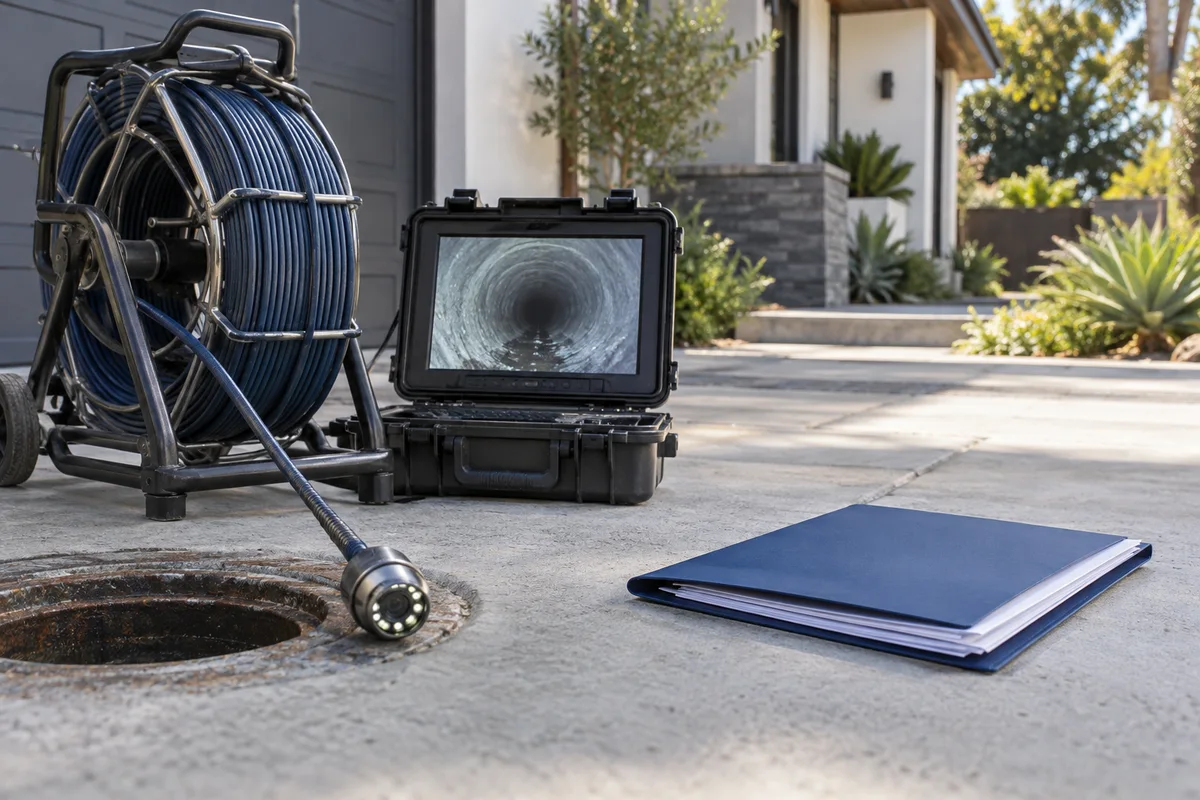
A camera inspection can provide information about observed conditions in the inspected segment. Ask for the actual report and video, the date, access points, extent inspected and limitations. A short invoice reading “sewer checked” is difficult to evaluate later.
Have the professional explain any recommended follow-up and whether the entire relevant segment was assessed. This guide does not interpret pipe images or choose a repair method. Its purpose is to help you request a complete, usable record.
Understand what the certificate establishes
A compliance program has its own trigger, test and documentation process. EBMUD’s page describes obtaining a certificate after its verification process. Do not assume a plumber’s camera visit is automatically the same event.
Ask whether a valid certificate already exists for the property and whether any proposed work affects its status. Where no certificate program applies, condition assessment can still be useful. The absence of a mandate does not tell you that a pipe is in good condition.
Review the documents side by side
Create separate entries for the condition report, repair contract, permit record and agency certificate. Record the issuing party and the pipe segment covered by each. If a document refers to a different address, incomplete segment or earlier condition, request clarification.
A hypothetical buyer could receive a clear camera video but still need the applicable agency’s verification. Another could have a certificate on file while wanting additional investigation of interior plumbing outside its scope. Neither record should be stretched beyond what it actually covers.
Use the gap to choose the next action
If the question is condition, obtain the appropriate inspection. If the question is compliance, contact the responsible program with the property record. If both are unresolved, coordinate them so the investigation and any repair can support the required closeout.
Your checklist is authority, covered segment, inspection date, limitations, existing certificate, triggering event, needed work and final record. This keeps a purchase or renovation from relying on a document that sounds reassuring but answers the wrong question.
A document-reading example for a disclosure packet
Suppose a hypothetical packet includes a plumber’s invoice, a video link and a regional agency certificate. Read the identifiers first: property, date and segment. Then read what each document claims. The invoice may describe a visit, the video may show an assessed route and the certificate may establish a specific program status. Do not combine them into a broader statement than any author made.
If the video stops before the relevant endpoint, ask the inspecting professional what limitation that creates. If the certificate belongs to an earlier project, check the official status rather than deciding from its appearance alone. If an invoice says replacement without identifying the location, request the underlying scope or a clarifying record.
Now define your decision. A buyer asking about hidden repair risk may need condition information even where the compliance record is satisfactory. A remodel owner approaching final sign-off may need a missing agency record even if the pipe was recently repaired. Asking the right question prevents paying for an inspection that does not resolve the actual blocker.
Use a comparison table with columns for document, issuer, scope, limitation and next action. A limitation is not automatically a defect or a reason to abandon a purchase; it is information that may require professional interpretation. Have the appropriate adviser explain its significance for your decision.
Finally, retain copies of the original records rather than screenshots of a summary. Videos, reports and certificates can become difficult to retrieve after a transaction. An organized folder preserves the evidence boundary and helps a future professional avoid repeating work because nobody can tell what was previously assessed.
Related questions
Does a sewer video prove EBMUD compliance?
Do not assume so. Check the property’s official certificate status and the applicable verification process separately from the contractor’s condition report.
Is an inspection useless where certification is not required?
No. Condition assessment and regulatory compliance serve different purposes. Decide whether an inspection is useful for your property even if no transfer-triggered certificate applies.
Official sources
Why readers ask this question
These public discussions informed the topic. Individual experiences are not permit rules, verified prices or professional advice.